


Between Thanksgiving dinner, school parties, and a steady stream of cookies, the holidays can make healthy eating for kids feel impossible. As a pediatrician and a mom, I hear the same worry from parents every year: How do I keep my kids eating well without being the food police?
Here’s the good news. Healthy holiday eating for kids isn’t about perfection or restriction. It’s about balance over the whole season, a predictable routine, and a relaxed table. These five strategies are the ones I share with families in our office, and the ones I use at home.
5 Tips for Healthy Holiday Eating for Kids
1. Think in weeks, not meals
One big holiday dinner does not define your child’s nutrition. What matters is the pattern across days and weeks.
- Offer a mix of fruits, vegetables, whole grains, and protein across the day, not necessarily on every plate.
- Skip labels like “good” and “bad” foods. Kids who hear them often start to feel guilty or sneak the “bad” ones.
- If Thursday is heavy on pie, let Friday be an ordinary day. No need to compensate.
2. Keep meals and snacks on a regular rhythm
Travel, late dinners, and gatherings throw off routines, and hungry kids are cranky kids. A steady rhythm helps children stay in tune with their own hunger and fullness.
- Serve breakfast and lunch as usual on holiday days. Skipping meals to “save room” usually backfires with overeating or meltdowns.
- Pack familiar snacks like fruit, cheese sticks, yogurt, or whole-grain crackers for the car, the airport, or Grandma’s house.
- For toddlers, aim for something every 2 to 3 hours; older kids generally do well with three meals and one or two snacks.
3. You decide what and when; your child decides how much
This approach, known as the division of responsibility in feeding, is one of the most useful tools I give parents. Your job is to offer the food and set the mealtime. Your child’s job is to decide whether to eat and how much.
- Put a variety of dishes on the table and let your child choose from them.
- Don’t require a clean plate or a “no-thank-you bite.” Pressure tends to make picky eating worse.
- Help kids notice their own signals: “Is your tummy still hungry, or is it feeling full?”
4. Bring kids into the kitchen
Children are far more likely to try a food they helped make. The holidays are a natural time to build that curiosity.
- Let little ones wash vegetables, tear lettuce, or stir batter. Older kids can measure, peel, and follow a recipe.
- Have your child choose a colorful fruit or vegetable dish to bring to a family gathering.
- Serve new foods next to familiar favorites so trying something new feels low-stakes.
5. Make room for holiday treats
Pie, cookies, and hot chocolate are part of the tradition, and they can be part of a healthy relationship with food.
- Serve dessert as a normal part of the meal rather than a reward for eating vegetables. Using sweets as a prize makes them feel even more special.
- Avoid making treats completely off-limits; forbidden foods often become the ones kids fixate on.
- Keep the focus on the people at the table, not on how much anyone ate.
A quick note on food allergies at gatherings
If your child has a food allergy, holiday meals bring extra risk: unfamiliar recipes, shared serving spoons, and well-meaning relatives. Talk to the host ahead of time, bring at least one safe dish your child loves, and make sure their epinephrine auto-injectors travel with them.
When to talk to your pediatrician
Every child’s needs are different. Reach out to us if you notice:
- Weight loss or a child who isn’t growing as expected
- A very short list of foods your child will accept, or a list that keeps shrinking
- Gagging, choking, or vomiting with certain textures
- Frequent distress, anxiety, or battles around mealtimes
- Ongoing constipation, stomach pain, or reactions after eating
We’re happy to help you build a plan that fits your child and your family.
Frequently asked questions
- Is it okay for my child to have sweets every day during the holidays? Yes, in reasonable portions. A small treat alongside a balanced meal is fine. What matters most is that sweets don’t crowd out regular meals and that they aren’t used as a reward or a bribe.
- My child barely ate Thanksgiving dinner. Should I worry? Usually not. Kids’ appetites vary a lot from meal to meal, especially when they’re excited, overtired, or snacked earlier. Look at what they eat across the whole day or week.
- Does sugar make kids hyper? Controlled studies have not found that sugar causes hyperactivity. The excitement of the holidays, later bedtimes, and busy schedules are much more likely culprits.
- How do I handle relatives who push my child to clean their plate? A friendly, firm line works well: “We let her decide when she’s full.” Saying it once, calmly and in front of your child, also shows them they can trust their own body.
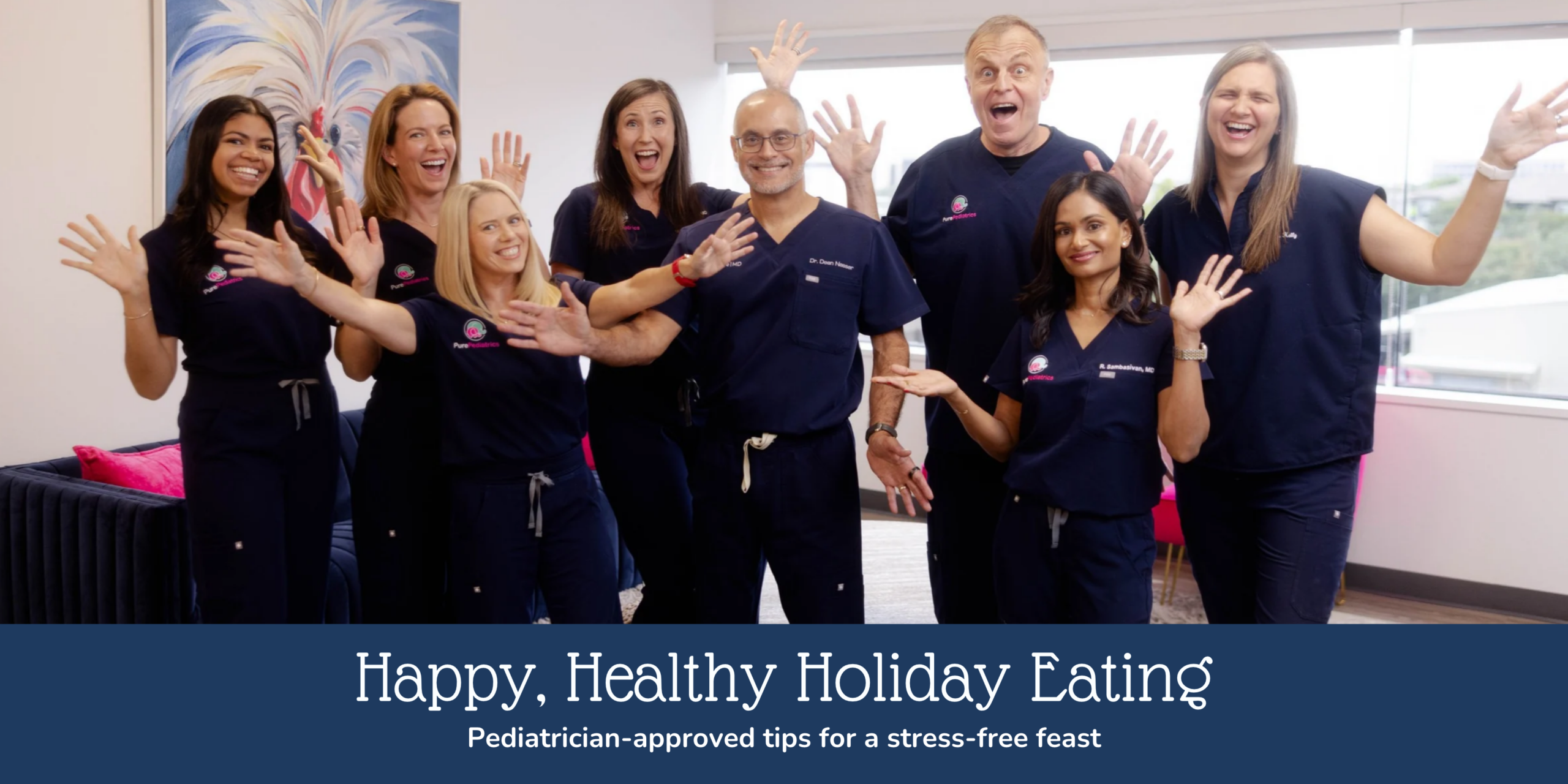
Happy holidays from PurePediatrics!
The goal isn’t a perfect holiday plate. It’s positive experiences around food that support your child’s growth now and their relationship with food for years to come. Keep routines where you can, offer variety, make room for favorites, and enjoy the time together.
From our PurePediatrics family to yours, happy holidays! If you have questions about your child’s eating or growth, call us at 832-431-4336 or message us anytime. We see families at our Bellaire, River Oaks, and Memorial locations in Houston.
Helpful Resources
- HealthyChildren.org: AAP guidance on flu prevention and seasonal illness.
- CDC – Essentials for Parenting: Tools for routines and healthy habits.
- Harvard Center on the Developing Child: Research on stress and resilience.